|
This weekend, our parish will bless and inaugurate a new tabernacle for the main sanctuary. At a deeper level, however, it tells a story, a story that begs thousands of years ago and continues today.
During Israel’s forty years in the desert, God instructed Moses to build the Tent of Meeting, a sacred place where Moses would go to speak with God face to face. The tent was the Ark of the Covenant, a sacred chest covered in gold that contained the tablets of the Law, the manna from the desert, and Aaron’s staff. These were signs of God’s presence among His people. What makes this story especially meaningful for us is that the architecture of St. John Neumann was intentionally designed to reflect these biblical realities. The ceiling of our church resembles a great tent, recalling the Tent of Meeting in the wilderness. Since the dedication of our church in 1996, that symbol has been at the heart of our worship space.
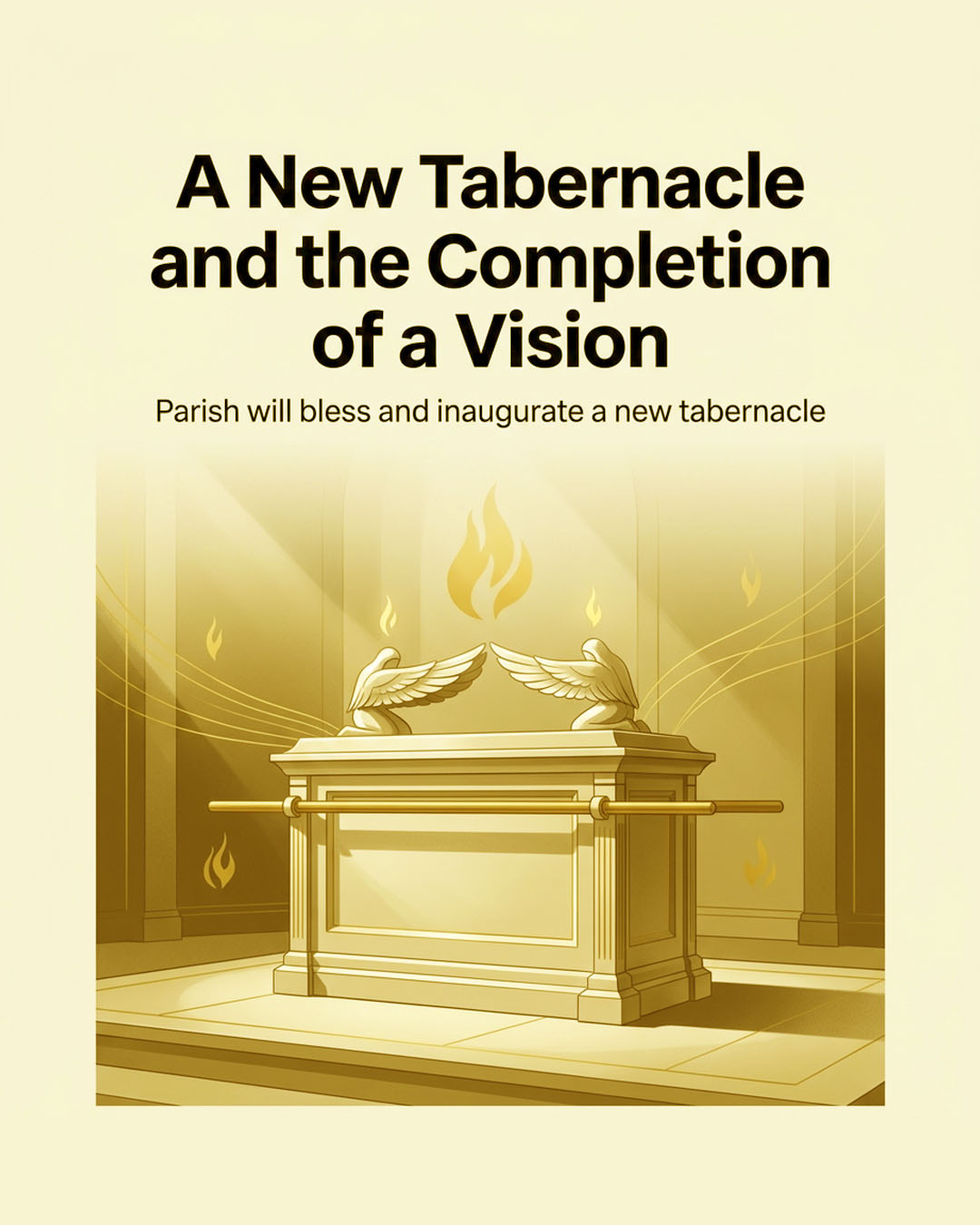
Our new tabernacle deepens that vision. This unique work of art is designed to evoke the Ark of the Covenant. It reminds us that God’s presence is no longer represented merely by signs and symbols. The tabernacle contains Jesus Christ Himself in the Blessed Sacrament: His Body, Blood, Soul, and Divinity. The symbolism extends even further. During the Exodus, God guided His people through the wilderness by a pillar of cloud by day and a pillar of fire by night. In later centuries, great lampstands in the Temple recalled God’s guiding presence among His people. Since the founding of our parish, the image of four flames has been at our parish icon and sanctuary. Now those four torches will flank the new tabernacle, reminding us that the God who guided Israel through the desert continues to guide His people today.
In many ways, thirty years after the dedication of our church, this new tabernacle marks the original architectural vision of our sanctuary to completion. The tent, the ark, the flames, and the Eucharistic presence of Christ now come together in a unified way, telling the story of salvation we have entered our church.
Yet God’s plan did not end with a tent or even with the Temple in Jerusalem. The women of time came, when a child was given us and a son was born to us. The child was born in the stable, the Lord Jesus Christ, born to take on our humanity and our mortality. From the beginning, God’s presence has not only been distant and powerful, but tender and close. The sacred that once dwelt in a tent now dwells among us in the person of Jesus Christ.
And here is the most remarkable part of the story: when we receive Holy Communion, Christ comes to dwell within us. We become bearers of His presence in the world. The same Lord who guided Israel through the desert, who spoke with Moses face to face, who filled the Temple with His glory, and who took flesh in Mary’s womb now comes to dwell within us.
This is why preparing our hearts well to receive Holy Communion matters. This is why reverence before the Blessed Sacrament matters. This is why we genuflect when we enter the church. This is why we pray quietly before Mass. These are not merely customs; they are acts of love toward the One who remains with us. As we inaugurate our tabernacle, may it remind us that God wants to be close to His people, not in a tent, or the temple of Jerusalem, but here among us. May it remind us that Mary is the true Ark and that we, by our faith, are carrying Jesus to our city, to our families and to the whole world.
Fr. José N. Alfaro
Read More
========
Este fin de semana, nuestra parroquia bendecirá e inaugurará un nuevo sagrario para el santuario principal. En un nivel más profundo, sin embargo, cuenta una historia, una historia que comenzó hace miles de años y continúa hoy.
Durante los cuarenta años de Israel en el desierto, Dios instruyó a Moisés para construir la Tienda del Encuentro, un lugar sagrado donde Moisés iba a hablar con Dios cara a cara. La tienda era el Arca de la Alianza, un cofre sagrado cubierto de oro que contenía las tablas de la Ley, el maná del desierto y la vara de Aarón. Estos eran signos de la presencia de Dios entre su pueblo. Lo que hace que esta historia sea especialmente significativa para nosotros es que la arquitectura de St. John Neumann fue diseñada intencionalmente para reflejar estas realidades bíblicas. El techo de nuestra iglesia se parece a una gran tienda, recordando la Tienda del Encuentro en el desierto. Desde la dedicación de nuestra iglesia en 1996, ese símbolo ha estado en el corazón de nuestro espacio de culto.
Nuestro nuevo sagrario profundiza esa visión. Esta obra de arte única está diseñada para evocar el Arca de la Alianza. Nos recuerda que la presencia de Dios ya no está representada meramente por signos y símbolos. El sagrario contiene al mismo Jesucristo en el Santísimo Sacramento: su Cuerpo, Sangre, Alma y Divinidad. El simbolismo se extiende aún más. Durante el Éxodo, Dios guió a su pueblo por el desierto con una columna de nube de día y una columna de fuego de noche. En siglos posteriores, grandes candelabros en el Templo recordaban la presencia guía de Dios entre su pueblo. Desde la fundación de nuestra parroquia, la imagen de cuatro llamas ha estado en nuestro ícono parroquial y santuario. Ahora esas cuatro antorchas flanquearán el nuevo sagrario, recordándonos que el Dios que guió a Israel por el desierto continúa guiando hoy a su pueblo.
De muchas maneras, treinta años después de la dedicación de nuestra iglesia, este nuevo sagrario marca la visión arquitectónica original de nuestro santuario hasta su culminación. La tienda, el arca, las llamas y la presencia eucarística de Cristo ahora se unen de manera unificada, contando la historia de salvación en la que hemos entrado en nuestra iglesia.
Sin embargo, el plan de Dios no terminó con una tienda ni siquiera con el Templo de Jerusalén. Llegó el tiempo, cuando se nos dio un niño y nos nació un hijo. El niño nació en el establo, el Señor Jesucristo, nacido para asumir nuestra humanidad y nuestra mortalidad. Desde el principio, la presencia de Dios no solo ha sido distante y poderosa, sino también tierna y cercana. Lo sagrado que una vez habitó en una tienda ahora habita entre nosotros en la persona de Jesucristo.
Y aquí está la parte más notable de la historia: cuando recibimos la Sagrada Comunión, Cristo viene a habitar dentro de nosotros. Nos convertimos en portadores de su presencia en el mundo. El mismo Señor que guió a Israel por el desierto, que habló con Moisés cara a cara, que llenó el Templo con su gloria y que tomó carne en el vientre de María ahora viene a habitar dentro de nosotros.
Por eso es importante preparar bien nuestros corazones para recibir la Sagrada Comunión. Por eso es importante la reverencia ante el Santísimo Sacramento. Por eso hacemos la genuflexión cuando entramos en la iglesia. Por eso oramos en silencio antes de la Misa. Estas no son meras costumbres; son actos de amor hacia Aquel que permanece con nosotros. Al inaugurar nuestro sagrario, que nos recuerde que Dios quiere estar cerca de su pueblo, no en una tienda ni en el templo de Jerusalén, sino aquí entre nosotros. Que nos recuerde que María es el verdadero Arca y que nosotros, por nuestra fe, llevamos a Jesús a nuestra ciudad, a nuestras familias y al mundo entero.
P. José N. Alfaro
Lea más
|